With gynecomastia affecting nearly half of all men at some point in their lives, understanding the cost of gynecomastia surgery in 2026 has become crucial for those considering treatment. As healthcare costs continue to rise and surgical techniques evolve, the financial investment for male breast reduction surgery requires careful planning and a comprehensive understanding.
This complete guide breaks down everything you need to know about gynecomastia surgery expenses in 2026, from basic surgeon’s fees to hidden costs that many patients overlook. Whether you’re dealing with enlarged male breasts due to hormonal imbalances, medications, or genetic factors, it’s important to note that enlarged breasts characterize gynecomastia in men caused by excess glandular tissue, which is different from excess fat. The national average cost of gynecomastia surgery can range from $3,250 to $12,600. Understanding the full financial picture will help you make an informed decision about this life-changing cosmetic procedure.
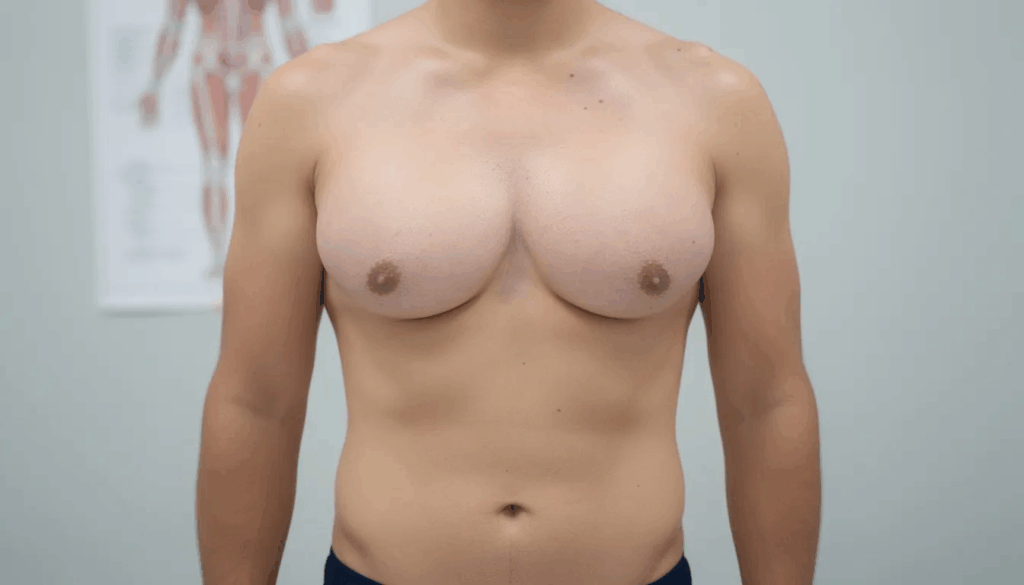
2026 Gynecomastia Surgery Cost Overview
The cost of gynecomastia surgery in 2026 reflects significant increases from previous years, with the average surgeon’s fees ranging from $6,200 to $7,500, representing a notable jump from the $5,587 average reported by the American Society of Plastic Surgeons in recent years. However, the surgeon’s fee represents only one component of the total expenses patients face, as other costs, such as anesthesia and facility fees, are separate. Gynecomastia surgeons with extensive experience may charge higher fees, but these often include comprehensive services such as initial consultations and post-operative care, making it important to choose a qualified specialist for optimal results.
Total procedure costs, including anesthesia and facility fees, typically range from $8,500 to $15,000 for most cases. Metropolitan areas like San Francisco, New York, and Los Angeles see costs reaching up to $18,000 for comprehensive treatment, particularly for complex cases that require extensive tissue removal and skin tightening. Complex procedures, such as those involving skin excision, tend to be more expensive due to their intricacy and the extended time required to complete them.
Basic liposuction-only procedures for mild gynecomastia or pseudogynecomastia start around $6,000 total cost, making them the most affordable option for patients with primarily excess fatty tissue. However, complex cases involving significant excess tissue and direct breast gland excision can reach $12,000 or more, especially when performed by a renowned plastic surgeon in premium markets.
Revision surgeries, necessary in 5–10% of cases, typically cost 20–30% more than primary procedures due to increased surgical complexity and longer operative times. Patients should budget for this possibility when planning their initial investment in male breast reduction.
Geographic variation remains substantial, with West Coast and Northeast metropolitan areas commanding premium pricing due to higher overhead costs and increased demand for cosmetic surgery services.
Complete Cost Breakdown for 2026
Understanding the complete cost structure helps patients prepare financially and avoid unexpected expenses. The surgeon’s fee, while significant, represents just one part of the total investment required for successful gynecomastia surgery. The cost can also be influenced by the type and complexity of surgical procedures chosen for gynecomastia treatment, as more advanced or specialized surgical procedures may require additional resources and expertise.
Surgeon’s Professional Fee: $6,200–$7,500
The surgeon’s fee varies significantly based on experience, credentials, and geographic location. Board-certified plastic surgeons with extensive gynecomastia experience typically charge at the higher end of this range, while newer practitioners may offer more competitive rates. However, choosing a board-certified surgeon with proven experience in gynecomastia procedures is crucial for achieving optimal results.
Anesthesia Fees: $1,200–$1,800
Anesthesia costs depend on procedure length and the type of anesthesia used. Local anesthesia with sedation costs less than general anesthesia, but the choice depends on the complexity of the surgery and patient preferences. Most patients undergoing comprehensive gynecomastia surgery require general anesthesia, which increases costs but ensures comfort throughout the procedure.
Surgical Facility Fees: $2,500–$4,000
Accredited ambulatory surgery centers charge facility fees covering operating room use, equipment, and support staff. Hospital outpatient departments typically cost more than dedicated cosmetic surgical facilities, but both provide safe environments for surgery performed by qualified surgeons.
Pre-operative Requirements: $300–$600
Before gynecomastia surgery, most patients undergo lab tests and a medical evaluation to ensure they are healthy enough to proceed. These tests typically include blood work, an ECG if necessary, and a thorough physical examination. Some surgeons also require psychological evaluation for patients experiencing significant physical and emotional distress from their condition.
Post-operative Garments: $150–$300
Compression garments are essential for proper healing and optimal results. Many surgeons include these in their package pricing, while others charge separately. Wearing a high-quality compression garment for at least four weeks helps reduce swelling and supports healing after gynecomastia surgery. Quality compression garments worn for several weeks minimize swelling and support the healing process.
Prescription Medications: $100–$200
Pain management medications and antibiotics prevent infection and manage post-operative discomfort. While relatively minor compared to surgical costs, these medications are essential components of safe and successful surgery.
Factors Influencing 2026 Surgery Costs

Geographic Location Impact
Geographic location remains one of the most significant factors affecting gynecomastia cost, with substantial regional variations reflecting local market conditions and cost-of-living differences.
West Coast cities, particularly San Francisco and Los Angeles, typically charge 25–40% more than the national average due to premium real estate costs, higher staff wages, and increased demand for cosmetic procedures. The Marin Cosmetic Surgery Center and similar premium facilities in these markets often charge at the top of the range, but provide comprehensive care and experienced surgeons.
East Coast metropolitan areas, including New York and Boston, see 20–35% premium pricing compared to national averages. These markets attract top plastic surgeons and offer advanced surgical facilities, justifying higher costs for many patients seeking the best possible outcomes.
Midwest and Southern states typically charge 10–20% below the national average, while still offering access to qualified board-certified plastic surgeons. Patients in these regions often enjoy excellent value without sacrificing quality of care.
Rural areas offer the lowest costs, but may have limited access to board-certified specialists experienced in gynecomastia procedures. Patients in these areas often travel to metropolitan centers for treatment, adding transportation and accommodation costs to their total expenses.
Surgeon Experience and Credentials
The surgeon’s background significantly impacts pricing, with experience and credentials justifying premium fees for many patients seeking the best possible outcomes. When selecting a surgeon, it is also crucial to consider their personal and professional integrity, as ethical standards and dedication to patient care are essential for trust and quality results.
Board-certified plastic surgeons with 10+ years of experience command premium rates, often charging 20–40% more than less experienced practitioners. However, their extensive training and proven track record often justify the higher surgical fees by delivering superior results and lower complication rates.
Specialists performing 100+ gynecomastia procedures annually understand the nuances of different case types and can create tailored treatment plans for optimal outcomes. These high-volume surgeons typically charge premium rates, but offer the expertise necessary for complex cases.
Revision specialists who focus on correcting unsuccessful initial procedures typically charge 20-50% more due to the technical complexity involved. However, their specialized skills are invaluable for patients requiring corrective surgery.
Fellowship-trained cosmetic surgeons often fall in the middle price range, offering excellent training and results at more moderate costs than the most prestigious practices.

Procedure Complexity and Technique
The severity of gynecomastia and the required surgical approach directly impact costs, with more complex cases requiring additional time, skill, and resources.
Grade 1 gynecomastia, characterized by minimal breast tissue enlargement, typically costs $6,000–$9,000. These cases often involve primarily liposuction to remove excess fat with minimal tissue excision required.
Grade 2–3 cases requiring substantial excess breast tissue removal range $9,000–$13,000, involving both liposuction and surgical excision techniques. In these cases, surgical removal of excess glandular tissue is a key component of gynecomastia surgery, as this tissue is often the primary cause of the condition. These procedures take longer and require more advanced surgical skills to achieve optimal contours.
Grade 4 severe cases with significant skin excess reach $12,000–$18,000, often requiring skin removal and advanced reconstruction techniques. These complex procedures may involve extended operative times and specialized techniques to achieve masculine chest contours.
Combined liposuction and excision procedures add $2,000–$3,000 to base costs, but provide comprehensive treatment for mixed tissue types. Most patients benefit from this combined approach to address both fatty and glandular components of their condition.
What is Dr. Delgado’s cost for Gynecomastia Surgery?
Gynecomastia Surgery Cost is based on the “Grade” or Severity.
Grade 1 Gynecomastia (or “puffy nipples”)

Grade 1 Cost Breakdown
Surgical Technique: Breast tissue excision with liposuction or the “pull-through” procedure.
- Surgery fee: $7,000
- Ambulatory facility fee: $3,000
- Board-certified anesthesiologist: $900
- 2 custom-made surgical garments: $200
- Silicone sheeting for incision management: $50
- Tissue pathology and medications are typically covered by health insurance.
Grade 2 Gynecomastia (the most common grade of gynecomastia)

Patient with grade 2 gynecomastia; before-and-after photos of male breast reduction surgery.
Grade 2 Cost Breakdown
Surgical Technique: Breast gland excision with liposuction
- Surgery fee $8,000–$9,000
- Ambulatory facility fee $3,600
- Board-certified anesthesiologist $1,050
- 2 custom-made surgical garments $200
- Silicone sheeting for incision management $50
- Tissue pathology and medications are typically covered by health insurance.
Grade 3 Gynecomania (with skin excess)
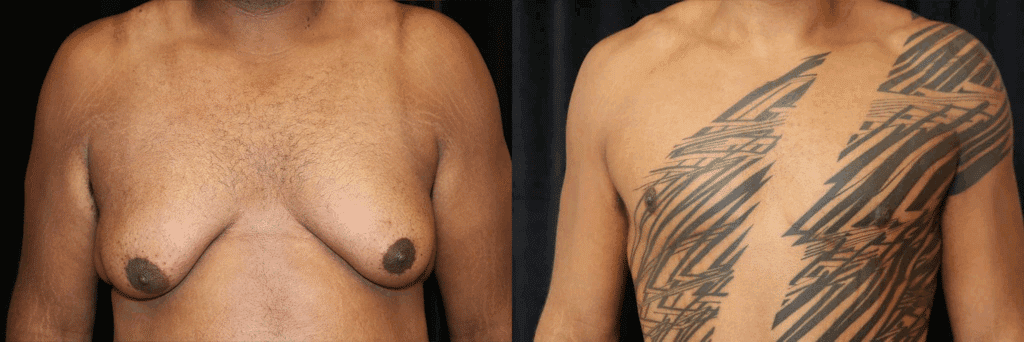
Patient with grade 3 gynecomastia; before-and-after photos of male breast reduction surgery. Note the tattoo hiding the incision.
Grade 3 Cost Breakdown
Surgical Technique: double incision mastectomy with a free nipple graft.
- Surgery fee $10,000–$11,000
- Ambulatory facility fee $4,000–$4,500
- Board-certified anesthesiologist $1,600
- 2 custom-made surgical garments $200
- Silicone sheeting for incision management $50
- Tissue pathology and medications are typically covered by health insurance.
Grade 4 Gynecomastia (with severe skin excess with axilla skin excess)
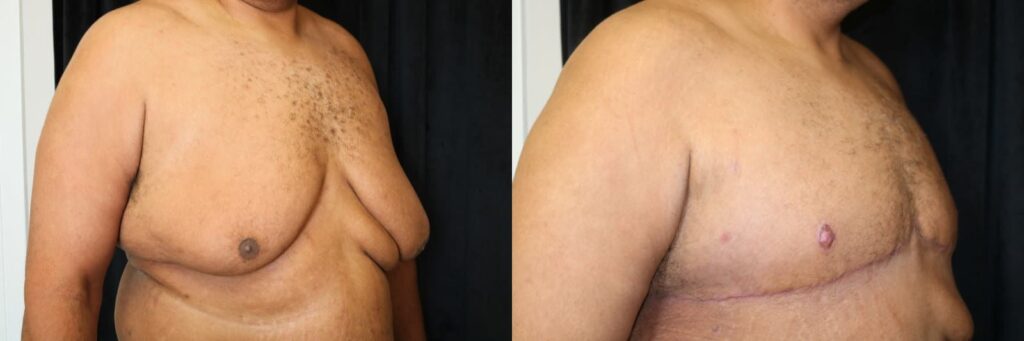
Patient with grade 4 gynecomastia; before-and-after photos of male breast reduction surgery at 3 months post-op.
Grade 4 Cost Breakdown
Surgical Technique: Extended double incision mastectomy with a free nipple graft.
- Surgery fee $13,000–$15,000
- Ambulatory facility fee $5,500
- Board-certified anesthesiologist $2,100
- 2 custom-made surgical garments $200
- Silicone sheeting for incision management $50
- Tissue pathology and medications are typically covered by health insurance.
Revision Gynecomastia Surgery Cost

Patient with crater deformity, corrected with “fat flaps.”
Dr. Delgado’s practice for gynecomastia includes approximately 40% of procedures focused on revision surgeries for men unhappy with prior procedures performed by other practitioners. This can be a distressing experience for patients, often costing more than the original procedure. Therefore, it is essential to select a gynecomastia surgeon who is experienced, board certified in plastic surgery, and has a strong reputation for surgical excellence.
In Dr. Delgado’s practice, the most frequent revisions are for patients who initially had only liposuction performed. This method fails to remove the surplus breast tissue. Correcting contour irregularities from previous surgeries requires specialized techniques and an advanced understanding of scar tissue management and tissue redistribution.
Dr. Delgado meticulously plans revision cases to tackle complications and unsatisfactory outcomes from earlier surgeries. His proficiency in these difficult situations results in high success rates in achieving a natural masculine chest appearance, even when prior surgeries have not. The success rate for revision surgeries conducted by Dr. Delgado greatly surpasses industry standards, highlighting his technical expertise and artistic approach to rectifying even the most complex cases that other surgeons might consider inoperable.
Understanding Gynecomastia and Treatment Options
Gynecomastia affects 40–60% of men at some point in their lives, causing enlarged breast tissue that can create significant psychological distress and self-consciousness. This common condition results from various factors, including hormonal imbalances, certain medications, genetics, and medical conditions affecting hormone levels.
The condition manifests differently in each patient, ranging from mild nipple puffiness to significant breast development resembling female breast tissue. While not medically dangerous, gynecomastia can significantly impact quality of life, self-confidence, and social interactions.
Surgical intervention becomes necessary when conservative treatments fail to address the enlarged breast tissue. Weight loss may reduce fatty tissue, but it cannot eliminate true glandular tissue that characterizes most cases of gynecomastia. Gynecomastia surgery involves removing this excess tissue to restore masculine chest contours. Some patients may also consider non-surgical aesthetic treatments as less invasive alternatives or adjuncts to surgery, depending on their specific needs.
Male breast reduction surgery permanently removes excess fat and glandular tissue through carefully planned surgical techniques. The specific approach depends on the amount and type of tissue present, with surgeons selecting optimal methods to achieve natural-looking results while minimizing scarring.
Modern gynecomastia procedures achieve excellent results with minimal scarring when performed by experienced surgeons. The permanence of the results makes this investment worthwhile for most patients who have struggled with this condition for years.
Cosmetic Surgery Benefits
Cosmetic surgery, particularly gynecomastia surgery, offers transformative benefits for men struggling with enlarged male breasts and the physical and emotional challenges that come with excess breast tissue. While the cost of gynecomastia surgery is significant, it’s important to consider the long-term benefits a safe and effective procedure can offer.
Male breast reduction surgery is a specialized cosmetic procedure designed to remove substantial excess breast tissue, including both glandular and fatty components. By addressing the root cause of gynecomastia, this surgery not only improves chest contours but also alleviates the physical discomfort and self-consciousness that often accompany enlarged male breasts. Many patients experience relief from skin irritation, rashes, and other complications caused by excess tissue, thereby improving their physical health.
Beyond the physical improvements, gynecomastia surgery can have a profound impact on emotional well-being. The presence of excess breast tissue can cause significant physical and emotional distress, affecting self-esteem and social confidence. Successful gynecomastia procedures help restore a more masculine chest appearance, empowering individuals to feel comfortable in their bodies and more confident in daily life. This boost in self-assurance often translates into improved mental health, reduced anxiety, and a more positive outlook.
Choosing a board-certified plastic surgeon is essential for achieving the best possible results. Renowned plastic surgeons like Dr. Delgado, at Marin Cosmetic Surgery Center, are experienced in creating tailored treatment plans that address each patient’s unique needs. Their expertise ensures a smooth surgical journey, from the initial consultation through recovery, and maximizes the likelihood of successful surgery with natural-looking results.
While most health insurance policies do not cover gynecomastia surgery because it is generally considered cosmetic, there are exceptions when surgery is deemed medically necessary. It is essential to carefully examine your health insurance policy and speak with your provider to determine whether any coverage is available for your specific case.
Ultimately, the cost of gynecomastia surgery should be viewed in terms of its lasting benefits. By removing excess tissue and addressing both physical and emotional concerns, male breast reduction surgery can significantly enhance quality of life. With the guidance of a board-certified plastic surgeon and a personalized approach to care, patients can look forward to a safe and effective procedure that delivers lasting confidence and well-being.
Insurance Coverage in 2026
Insurance coverage for gynecomastia surgery remains limited, with most health insurance policies classifying these procedures as cosmetic rather than medically necessary. Gynecomastia surgery covered by insurance is possible if specific medical criteria are met, such as persistent pain or severe physical symptoms. Insurance coverage for gynecomastia surgery often depends on demonstrating medical necessity and meeting individual policy requirements, so patients should review their insurance details and consult with their provider. Understanding coverage possibilities and requirements helps patients plan financially for their treatment.
Most insurance plans exclude coverage for gynecomastia surgery, considering it an elective cosmetic procedure regardless of the psychological impact on patients. However, insurance coverage for gynecomastia surgery is often limited, depending on medical necessity and specific policy criteria. Some cases may qualify for coverage when specific medical criteria are met and documented.
Medical necessity documentation may secure insurance coverage for severe cases causing physical symptoms, such as back pain, skin irritation, or functional limitations. It is important to understand the limitations and documentation requirements of health insurance coverage. Patients must provide comprehensive medical records demonstrating the physical impact of their condition beyond cosmetic concerns.
Insurance approval requires 2+ years of documented condition with failed conservative treatment attempts. Insurers typically require evidence of attempted weight loss, hormonal evaluation, and treatment of underlying medical conditions before considering surgical coverage.
The pre-authorization process involves detailed medical records, specialist evaluations, and often multiple appeals before approval. Patients should work closely with their surgeon’s office to compile necessary documentation and navigate the complex approval process, especially when addressing complications such as crater deformity after gynecomastia surgery.
Coverage rates remain below 15% for all gynecomastia procedures nationwide, making out-of-pocket payment the reality for most patients. Even when coverage is approved, patients typically face significant deductibles and copayments that can exceed several thousand dollars. The American Society of Plastic Surgeons offers guidelines for insurance claims related to gynecomastia surgery, and adhering to these guidelines can improve the chances of coverage. Plastic surgeons offer guidelines to help both patients and surgeons establish medical necessity and improve the likelihood of insurance coverage.
Financing Options Available in 2026
Various financing options help make gynecomastia surgery more accessible to patients who cannot pay the full amount upfront. Understanding these options helps patients choose the best approach for their financial situation.
CareCredit® offers 0% interest financing for 12–24 months with approved credit, making it one of the most popular choices for cosmetic surgery patients. Longer repayment terms are available with competitive interest rates for patients requiring extended payment plans.
Specialized medical loans through companies like Prosper Healthcare Lending provide dedicated financing for cosmetic procedures. These lenders understand the unique needs of cosmetic surgery patients and offer flexible terms with competitive rates.
In-house payment plans offered by 60% of plastic surgery practices provide convenient financing directly through the surgeon’s office. These plans often feature flexible terms and may not require credit checks, making them accessible to patients with varying credit profiles.
Personal loans and credit cards serve as alternative financing options, though interest rates may be higher than those for specialized medical financing. Patients with excellent credit may qualify for promotional rates that make these options competitive. For those interested in post-surgical treatment options, such as Kenalog shots for reducing scar tissue and puffiness after gynecomastia surgery, additional information is available.
HSA and FSA accounts can be used for medically necessary procedures, though most gynecomastia surgeries don’t qualify. Patients should verify eligibility with their plan administrators before using these tax-advantaged accounts.
Medical loans specifically designed for cosmetic procedures often provide the best combination of competitive rates and flexible terms. These specialized lenders understand the investment patients are making in their self-confidence and well-being.

Choosing the Right Surgeon for Value
Selecting the right surgeon involves balancing cost considerations with qualifications, experience, and expected outcomes. The cheapest option rarely provides the best value when considering long-term results and potential revision needs.
Board certification by the American Board of Plastic Surgery ensures proper training and ongoing education in plastic surgery principles and techniques. This certification represents the gold standard for plastic surgeons and should be non-negotiable when selecting a surgeon.
Reviewing before-and-after photos, particularly for gynecomastia cases, helps assess the surgeon’s aesthetic sense and technical capabilities. Look for consistent results across different patient types and severity levels, with natural-looking outcomes and minimal scarring.
Verifying hospital privileges and surgical facility accreditation ensures the surgeon maintains high standards and practices in safe environments. Surgeons with hospital privileges undergo rigorous credentialing processes that verify their qualifications and competence.
Consider revision rates and patient satisfaction scores over simply choosing the lowest price. A surgeon with higher fees but lower revision rates often provides better value than cheaper options requiring corrective procedures.
Multiple consultations help patients compare different surgeons’ approaches, personalities, and costs. This process helps ensure the best fit between patient expectations and surgeon capabilities, while identifying the best value proposition.
The Society of Plastic Surgeons maintains directories of certified practitioners, helping patients identify qualified surgeons in their area. These resources provide valuable starting points for research and for selecting a surgeon.
Preparing for Surgery Costs
Proper financial preparation helps ensure a smooth surgical journey without unexpected financial stress during recovery. In addition to budgeting, patients should discuss bleeding risk factors with their surgeon and carefully follow all preoperative instructions to minimize complications. Avoiding medications and supplements that increase bleeding risk contributes to safer surgical procedures and smoother recovery outcomes. Understanding the full cost picture and planning accordingly reduces anxiety and allows focus on healing.
Budget an additional 10–15% beyond the quoted price to cover unexpected expenses. These can include additional garments, extended recovery time, or minor complications requiring additional care.
Factor in time off work, typically 1–2 weeks for full recovery to normal activities. Lost wages during recovery represent hidden costs that many patients overlook when calculating total expenses. Desk workers often return sooner than those with physical jobs.
Plan for potential revision surgery costs, necessary in 5–10% of cases requiring touch-ups or corrections. While most surgeons offer reduced revision rates, patients should budget for this possibility when planning their initial investment. To improve the likelihood that insurance will cover gynecomastia surgery, patients must demonstrate that the condition has persisted for at least two years.
Consider travel and accommodation costs if seeking specialist care outside your local area. Patients often find value in traveling to experienced surgeons, but they should factor in these additional expenses when budgeting.
Create a comprehensive budget that includes all direct and indirect costs associated with surgery. This planning helps avoid financial stress during recovery and ensures patients can focus on healing rather than money concerns.
Recovery and Long-Term Value
Understanding the recovery process and long-term benefits helps patients appreciate the full value of their investment in gynecomastia surgery. Gynecomastia surgery recovery involves careful post-operative care, managing soreness and swelling, wearing compression garments, and following activity restrictions to achieve optimal, natural-looking results. The permanence of the results and improved quality of life often justify the initial expense.
Most patients return to desk work within 7–10 days post-surgery, though physical limitations remain for several weeks. The surgeon will monitor healing progress and provide specific guidelines for returning to normal activities. Patients should avoid heavy lifting or strenuous exercise for about six weeks after gynecomastia surgery to ensure a smooth recovery. Regular follow-up appointments enable the surgeon to monitor healing, evaluate progress, and address any issues that may arise during recovery.
Full physical activity clearance typically occurs at 6–8 weeks, when patients can resume all exercises and sports activities. Following post-operative care instructions during this period ensures optimal healing and results.
Results are permanent with stable weight maintenance, making gynecomastia surgery a one-time investment for most patients. Significant weight gain can affect results, but the removed glandular tissue will not return.
Patient satisfaction rates exceed 95% when performed by qualified surgeons, reflecting the dramatic improvement in self-confidence and quality of life. Most patients consider the investment worthwhile for the psychological benefits alone.
Long-term psychological benefits often justify investment costs, with patients reporting increased self-confidence, better relationships, and improved quality of life. The permanent nature of results makes the cost-per-year benefit attractive over a lifetime. Proper recovery and diligent follow-up care are essential to achieving the best possible surgical outcome.
Post-operative care includes regular follow-up appointments to ensure proper healing and address any concerns. Following the surgeon’s instructions carefully helps ensure optimal results and reduces the risk of complications.

2026 Cost Trends and Predictions
Understanding cost trends helps patients time their surgery and prepare for future expenses. Several factors influence pricing trends in the cosmetic surgery market.
Annual cost increases of 3–5% are expected due to inflation and increased demand for cosmetic procedures. These increases reflect rising costs for facilities, staff, and medical supplies across the healthcare industry.
Technology improvements may reduce facility time, but increase equipment costs, creating mixed effects on total pricing. Advanced techniques often improve results, but may increase per-case expenses for surgeons and facilities.
Increased awareness of gynecomastia is driving higher patient volume and competitive pricing in some markets. More patients seeking treatment create opportunities for competitive pricing while maintaining quality standards.
Telemedicine consultations reduce preliminary costs by allowing initial evaluations without travel expenses. However, in-person evaluations remain necessary for surgical planning and post-operative care.
Package pricing is becoming standard to improve cost transparency and help patients understand total expenses upfront. This trend benefits patients by eliminating surprise costs and allowing better financial planning.
The trend toward all-inclusive pricing helps patients budget more effectively and reduces financial surprises during treatment. More practices are adopting transparent pricing models that include all necessary components.
Making the Financial Decision
The decision to invest in gynecomastia surgery involves weighing costs against long-term benefits and quality-of-life improvements. Making an informed financial decision requires considering multiple factors beyond just price.
Consider total value, including surgeon expertise, facility quality, and included services, rather than focusing solely on the lowest price. The cheapest option often proves more expensive when revision surgeries or complications occur.
Avoid choosing based solely on the lowest price to prevent costly revisions that can double or triple the total investment. Quality surgery performed correctly the first time provides the best value regardless of initial cost.
Verify all included services and potential additional costs upfront to avoid surprises during treatment. Ask specific questions about what’s included in quoted prices and what might cost extra.
Plan financing before scheduling surgery to ensure affordable payment options are secured. This planning reduces stress and allows focus on recovery, rather than financial concerns, during the healing process. For those with questions about activities during this period, such as how soon one can resume masturbation after surgery, support and advice are available.
Remember that quality gynecomastia surgery is typically a one-time investment that provides permanent results and lifelong benefits. When viewed from a cost-per-year perspective over a lifetime, even premium pricing represents excellent value.
The investment in professional, board-certified care often saves money in the long term by avoiding complications, revisions, and unsatisfactory results that cheaper options may produce. Quality care provides peace of mind and optimal outcomes that justify the investment.
Understanding the complete cost of gynecomastia surgery in 2026 helps patients make informed decisions about this life-changing procedure. While the initial investment is substantial, the long-term benefits and improved quality of life make it worthwhile for most patients who choose experienced, qualified surgeons and plan their investment carefully.
Surgical Procedure
Gynecomastia surgery, commonly referred to as male breast reduction surgery, is a specialized cosmetic procedure aimed at removing excess breast tissue to create a flatter, more masculine chest contour in men. The cost of gynecomastia surgery can vary widely, with the national average ranging from $3,250 to $12,600, depending on factors such as the surgeon’s expertise, geographic location, and complexity of the case.
The procedure typically involves a combination of advanced surgical techniques tailored to each patient’s needs. For men whose enlarged breasts are primarily due to excess fatty tissue, liposuction is often the preferred method. This technique uses small incisions to remove excess fat, resulting in minimal scarring and a relatively quick recovery. However, when glandular tissue is the main contributor to gynecomastia, direct breast gland excision is necessary. Plastic surgeons often combine liposuction and excision to achieve the best possible results, especially when both excess fat and glandular tissue are present.
Before undergoing male breast reduction, it is essential to consult with a board certified plastic surgeon who specializes in gynecomastia procedures. During the initial consultation, the surgeon will conduct a thorough medical evaluation, discuss your goals, and create tailored treatment plans to address your specific concerns. Patients typically must undergo lab testing and a comprehensive health assessment to ensure they are suitable candidates for surgery and minimize any risks.
Gynecomastia surgery is usually performed under local anesthesia with sedation or general anesthesia, depending on the extent of the procedure and patient preference. The choice of anesthesia is made to ensure maximum comfort and safety throughout the surgery. The operation itself generally takes one to two hours, but more complex cases may require additional time.
After the procedure, patients receive detailed post-operative care instructions to support a smooth recovery and optimal surgical outcome. This includes wearing compression garments for several weeks to minimize swelling and support healing, as well as avoiding strenuous activities until cleared by the surgeon. Adhering to these guidelines is crucial for achieving a safe and successful surgery.
While gynecomastia surgery is considered cosmetic surgery and is not typically covered by health insurance, there are exceptions. In cases where enlarged breasts cause significant physical or emotional distress, some insurance policies may offer partial or full coverage. It is important to carefully review your health insurance policy and speak with your provider to determine whether your gynecomastia surgery is covered.
Choosing a board certified plastic surgeon with extensive experience in gynecomastia surgery, such as Dr. Miguel Delgado, ensures that patients receive expert care from consultation through recovery. With thousands of successful surgeries performed, renowned plastic surgeons are equipped to handle even the most complex cases, providing peace of mind and excellent results.
In summary, gynecomastia surgery is a safe and effective procedure for men seeking to address excess breast tissue and regain confidence in their appearance. By working with a qualified plastic surgeon and following all post-operative care instructions, most patients achieve smooth recovery and long-lasting, natural-looking results.
Meet Dr. Delgado Today!

Taking the first step toward gynecomastia surgery can feel overwhelming, but scheduling a complimentary consultation with Dr. Delgado is designed to provide you with all the information and support you need. During your consultation, Dr. Delgado will conduct a thorough evaluation of your condition, discuss your personal goals, and explain the various surgical options available to you. This personalized approach ensures your treatment plan is tailored specifically to your anatomy and desired outcomes.
Whether you prefer to meet in person or connect virtually from the comfort of your home, Dr. Delgado’s consultations are accessible and convenient, making it easier for patients from across the country and around the world to benefit from his expertise. The consultation is also an opportunity to ask questions about the cost of gynecomastia surgery, the recovery process, and financing options, helping you make an informed decision with confidence.
Don’t let concerns about gynecomastia or the associated costs hold you back from achieving a more masculine chest and improved self-confidence. Contact Dr. Delgado today to schedule your complimentary consultation and take the next step toward a safe, effective, and life-changing gynecomastia surgery experience.